Tankless vs Traditional Water Heaters
Compare the pros and cons of tankless and traditional water heaters to make the best choice for your home.
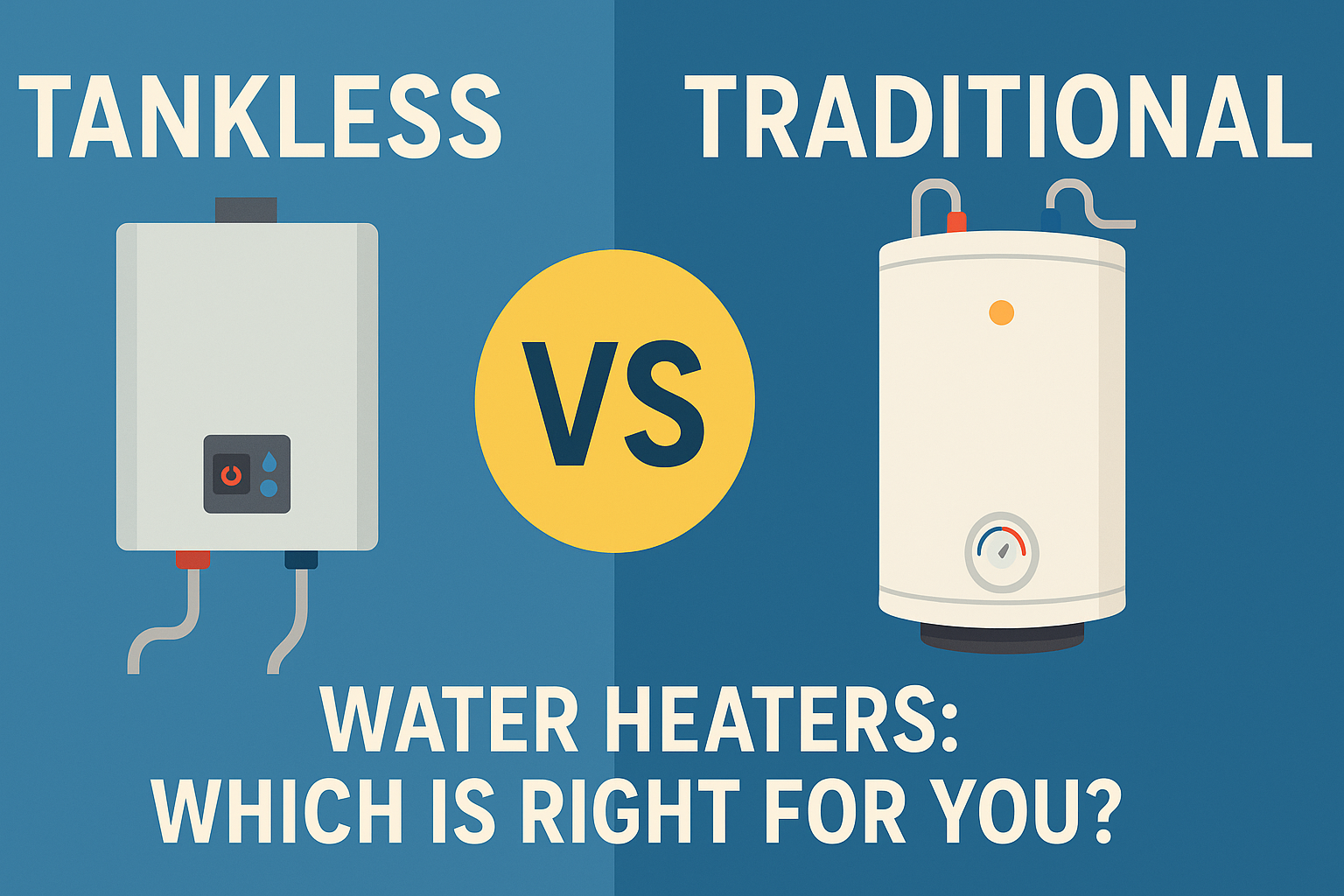
When it comes to heating water in your home, you have two main options: tankless (on-demand) water heaters or traditional tank-style water heaters. Each has its own set of advantages and disadvantages, and the best choice depends on your specific needs, budget, and home setup.
How They Work
Traditional Tank Water Heaters
Traditional water heaters store and continuously heat 30-80 gallons of water in an insulated tank. When you turn on a hot water tap, heated water flows out of the tank and is replaced by cold water, which is then heated.
Tankless Water Heaters
Tankless water heaters heat water on-demand as it flows through the unit. When you turn on a hot water tap, cold water travels through a pipe into the unit where it's heated by either a gas burner or electric element.
Cost Comparison
Upfront Costs (2025 Updated)
- Traditional tanks: $500-$2,000 for the unit, $500-$1,500 installation
- Tankless units: Electric models $600-$1,000, Gas/Propane units $1,000-$2,600 for the unit, $1,000-$3,500 installation
- Total installed cost: Electric $1,400-$3,000; Gas $1,600-$5,600; average ~$2,800
Operating Costs (2025 Data)
- Traditional: Higher energy costs due to standby heat loss
- Tankless: 24-34% more energy efficient for homes using ≤41 gallons daily, 8-14% savings for high-demand homes (≈86 gallons/day)
- Annual savings: Typically $200/year in utility costs, paying for itself in 4-7 years
Pros and Cons
Traditional Water Heater Advantages
- Lower upfront cost
- Simpler installation
- Familiar technology for most plumbers
- Can supply multiple fixtures simultaneously without temperature fluctuation
Traditional Water Heater Disadvantages
- Limited hot water supply (tank size)
- Takes up significant floor space
- 8-12 year lifespan
- Standby energy loss
- Risk of flooding if tank fails
Tankless Water Heater Advantages (2025 Update)
- Unlimited hot water supply
- Space-saving wall-mounted design
- 15-20 year lifespan
- 8-34% more energy efficient (depends on usage patterns)
- Lower risk of water damage
- Utility and state rebates available in many areas (the federal 25C tax credit expired Dec 31, 2025)
- New condensing models (mandatory from 2029) offer 13% better efficiency
Tankless Water Heater Disadvantages
- Higher upfront cost
- More complex installation
- May struggle with simultaneous high demand
- Potential for "cold water sandwich" effect
- Requires annual maintenance
Which Should You Choose?
Choose Traditional If:
- You have a limited budget for upfront costs
- Your home has older plumbing or electrical systems
- You frequently use multiple hot water sources simultaneously
- You want simple, familiar technology
Choose Tankless If:
- You want long-term energy savings (8-34% efficiency gains)
- Space is at a premium in your home
- You're building new or doing major renovations
- You want the latest in water heating technology
- Environmental impact is important to you
- State or utility rebates are available in your area (the federal 25C tax credit expired Dec 31, 2025)
- You plan to stay in your home for 4-7 years (typical payback period)
The Bottom Line (2025 Update)
For most homeowners, tankless water heaters offer better long-term value despite higher upfront costs. With 8-34% energy savings, longer lifespan, and space benefits, they typically pay for themselves in 4-7 years. However, traditional tank water heaters remain a solid choice for budget-conscious homeowners or those with high simultaneous hot water demands.
A note on incentives: The federal 25C tax credit expired on December 31, 2025. Some state and utility rebate programs remain available — check the DSIRE database for what's active in your area.
Consider your household's hot water usage patterns, budget, and long-term plans when making your decision. Consulting with a qualified plumber can help you determine the best option for your specific situation.
Ready to explore tankless options? Browse our complete product catalog or take our interactive quiz to find the perfect water heater for your home. For detailed information on specific models, check out our best electric, best gas, and best budget recommendations.